Australia's First H5N1 Dolphin Case: What It Means
A common dolphin found dead at Goolwa in South Australia has tested positive for H5N1 avian influenza, the first confirmed detection of the virus in a dolphin in Australia. The finding broadens the list of Australian mammals affected during the current wildlife outbreak, following detections in a long-nosed fur seal and a red fox.
The result is important for wildlife surveillance, but it does not mean the virus is spreading efficiently between dolphins or that ordinary beach visits have become dangerous. The most likely explanation is a spillover infection after the dolphin ate an infected bird or encountered a heavily contaminated environment.
Australia's public-health assessment remains that the risk to people is low. There have been no confirmed human infections with this outbreak strain in Australia, and authorities have reported no detections in poultry or commercial agriculture. The practical advice is still to avoid sick or dead wildlife, keep pets away and report unusual illness or deaths promptly.
What authorities confirmed at Goolwa
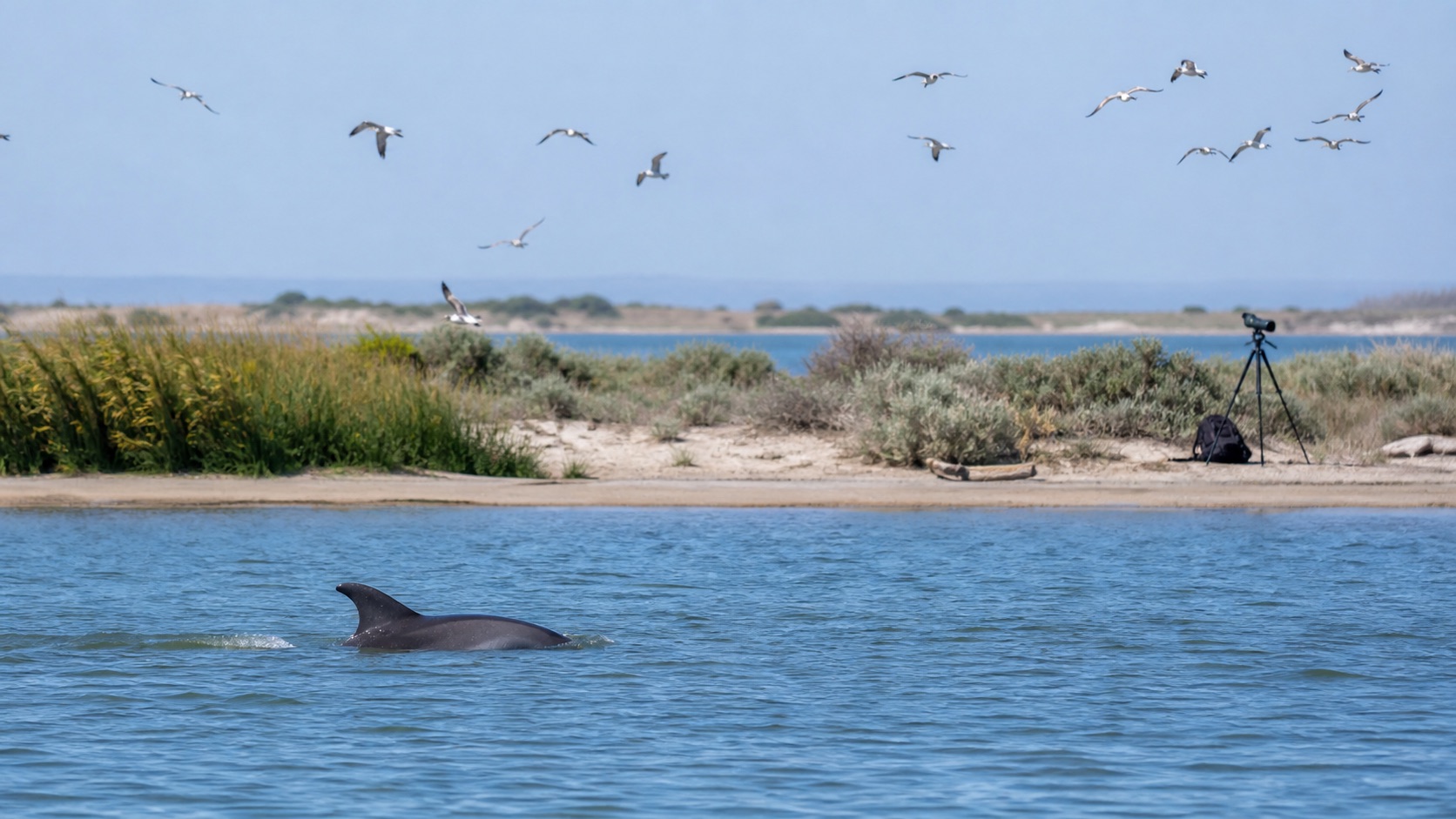
The dolphin was discovered near Goolwa on the Fleurieu Peninsula, where the Murray River meets the Southern Ocean. Laboratory testing confirmed highly pathogenic H5N1 avian influenza. It is the first known case involving an Australian common dolphin and another sign that the outbreak is not confined to seabirds.
Dolphin infections have been recorded elsewhere in the world, although they are reported far less often than cases in seals and sea lions. That may partly reflect opportunity: dolphins usually die at sea, and only a small share of carcasses reaches shore in a condition suitable for testing.
The South Australian result therefore fills a surveillance gap. It shows that a free-ranging cetacean can be exposed locally, but one carcass cannot reveal how often exposure occurs or whether other dolphins are infected.
The finding came after Australia's first confirmed mammal case, a long-nosed fur seal found near Beachport, and a later infection in a red fox. Together, those detections show separate opportunities for the virus to cross from birds into mammals occupying coastal, marine and terrestrial environments.
Why H5N1 can move from birds into mammals
H5N1 is adapted primarily to birds. Infected birds can shed virus through respiratory secretions and faeces, contaminating water, soil, feathers and carcasses. Predators and scavengers face an additional route of exposure when they eat an infected animal.
A dolphin may catch fish around a seabird feeding area, investigate a floating carcass or consume an infected bird. A fox can scavenge on land, while a seal can encounter contaminated water or prey. Different mammals can therefore test positive without transmitting the virus to one another.
These events are called spillovers: the pathogen crosses from its usual host into another species. Spillover becomes more likely when many infected birds share an environment with animals that hunt, scavenge or feed nearby.
Every mammal infection still deserves close attention. Replication inside a new host gives the virus another opportunity to change, and particular mutations can help an avian virus function better in mammalian cells. That is why laboratories sequence samples when possible and compare them with viruses collected from birds and other mammals.
It is also why the correct response lies between complacency and alarm. Scientists should investigate every case, while the public should avoid assuming that a single detection proves a new mode of transmission.
The dolphin does not prove mammal-to-mammal spread
Evidence of sustained transmission would require more than one positive result. Investigators would look for linked cases, patterns within a pod or colony, genetic similarities consistent with a chain of infection, and infections that cannot be explained by repeated exposure to birds.
None of that has been established by the Goolwa dolphin alone. The known Australian mammal cases involve different species and places, making independent exposure to infected birds or contaminated environments a plausible explanation.
The distinction matters for risk communication. A virus that occasionally jumps from a bird into one mammal presents a serious wildlife-management problem. A virus spreading efficiently from mammal to mammal could create longer transmission chains and a different set of risks. The Australian evidence currently supports the first situation, not the second.
Authorities will nevertheless watch for clusters. More stranded dolphins, unusual neurological or respiratory illness, unexplained deaths among seals, or several mammals testing positive in the same area would warrant deeper investigation.
How large is Australia's wildlife outbreak?
The national tally changes as results arrive, and dashboards may use different cut-off times. Federal reporting recorded 341 positive wildlife events by August 26, while South Australia's later update placed its state total at 249 after another overnight increase. These figures should not be treated as a fixed count of individual animals.
An “event” can represent a testing or detection episode rather than every bird affected at a location. A mass mortality incident involving many seabirds may therefore appear differently in official data from a single carcass submitted for testing.
The consistent signal is more important than the precise daily number: H5N1 is established across multiple wild-bird populations and continues to generate new detections. Seabirds can travel long distances and congregate in dense breeding or feeding groups, allowing an outbreak to affect remote islands as well as populated coasts.
Australia delayed the arrival of this globally circulating strain longer than many countries, but geography could not provide permanent isolation. Once infected migratory birds arrived, surveillance moved from preventing entry to identifying spread and protecting vulnerable species, farms and people with occupational exposure.
What the case means for dolphins and seals
Marine mammals can be difficult to monitor. They range over large areas, spend much of their lives offshore and may disappear after death. Strandings provide valuable samples, but they offer only a partial view of population health.
For the common dolphin population, one confirmed infection is not evidence of a population-level crisis. Researchers will want to know whether the animal had other illnesses, what viral sequence it carried and whether nearby strandings show a similar pattern.
The concern is sharper for species that gather in breeding colonies or already have small populations. Australian sea lions are endangered and concentrated at a limited number of sites. A disease entering a dense colony could add pressure to animals already affected by habitat disturbance, fishing interactions and changing food availability.
Overseas outbreaks explain the caution. H5N1 has been associated with large losses among seals and sea lions in South America and the sub-Antarctic. Those experiences do not predict the same outcome in Australia, but they demonstrate why early detection and limited disturbance around colonies matter.
Vaccinating or treating free-ranging marine mammals at scale is generally impractical. Protection depends heavily on surveillance, biosecurity around response teams, rapid carcass management where appropriate and keeping people and domestic animals from spreading contaminated material.
Is there a risk to people?
For the general public, Australian health authorities continue to describe the risk as low. H5N1 does not spread easily between people, and no human infection associated with this Australian outbreak strain has been confirmed.
Low risk is not zero risk. Direct, unprotected contact with an infected animal, its bodily fluids or a contaminated environment can create exposure. Wildlife responders, veterinarians, laboratory staff and people who handle birds professionally need stronger precautions than someone walking on a beach.
An intact carcass should never be treated as harmless because it has been dead for some time. People should not pick it up, move it for a photograph, remove feathers or attempt a rescue without instructions from trained responders.
Anyone who has had direct contact with a sick or dead bird or mammal should wash exposed skin, avoid touching their face and seek advice from the relevant state health authority. If fever, cough, sore eyes or other illness develops after a possible exposure, tell a clinician about the animal contact so it can be assessed properly.
This is precautionary guidance. It is not a reason to avoid all beaches, swimming or responsibly sourced food.
What beachgoers should do
Distance is the simplest protection. Do not touch a sick or dead bird, dolphin, seal or other wild animal. Keep children away and do not crowd a live animal that appears disoriented or stranded.
If it is safe to do so, note the exact location and take a photograph from a distance. A clear landmark, beach-access number or phone location pin can help responders find the animal. Report the sighting to the relevant state wildlife service or the national Emergency Animal Disease Hotline on 1800 675 888.
Do not attempt to push a dolphin or seal back into the water. Strandings can have many causes, and an animal may require an assessment before trained personnel decide what to do. Approaching can also stress the animal or expose the rescuer to bites, bodily fluids and contaminated water.
Avoid walking through areas containing several carcasses. Clean footwear according to official advice if accidental contact occurs, and do not carry shells, feathers or other material away from an affected site.
Pets need to be kept away
Dogs are naturally curious and may sniff, lick or eat dead wildlife. Keep them on a lead around shorebirds, strandings and areas where mortality has been reported. Do not allow a dog to retrieve a carcass or swim beside a sick marine mammal.
Cats should be kept indoors or securely contained, particularly near wetlands and coastal bird colonies. This protects the pet from exposure and protects native wildlife from hunting.
Contact a veterinarian before arriving at a clinic if a pet has handled a suspect animal or develops illness after wildlife contact. Advance notice allows staff to advise on safe transport and prepare appropriate infection controls.
Owners should not try to disinfect a pet with harsh household chemicals. Follow veterinary or official animal-health guidance instead, and wash hands after handling leads, collars or other equipment that may have contacted a carcass.
What it means for poultry and food
The dolphin detection is a wildlife finding. Authorities have reported no H5N1 infection in Australian poultry or commercial agriculture connected with the outbreak. Biosecurity measures aim to keep it that way by separating domestic flocks from wild birds and contaminated water.
Backyard poultry owners can reduce risk by keeping feed and water under cover, limiting access by wild birds, cleaning equipment and reporting sudden deaths or unusual illness. Clothing and footwear used around waterbirds should not be taken directly into a chicken enclosure.
Properly cooked poultry and eggs remain safe to eat. Standard food-safety practice—cooking thoroughly, preventing raw juices from contaminating other food and washing hands—remains appropriate. Consumers do not need to change diets because of a wildlife detection.
Farm detections would trigger separate animal-health controls and public notices. The absence of a commercial outbreak today does not remove the need for vigilance, but it does mean the Goolwa case should not be presented as evidence of an unsafe food supply.
Why a One Health response matters
H5N1 sits at the intersection of wildlife conservation, veterinary medicine, agriculture and human health. Information from one field can warn the others. A sick seabird may identify a local hotspot; a mammal sequence may reveal viral changes; farm surveillance may detect a biosecurity breach; health monitoring can follow people with significant exposure.
This connected approach is often called One Health. It is especially useful for a virus that crosses species and landscapes. It also supports proportionate decisions: restrictions can focus on actual exposure pathways rather than imposing broad measures unsupported by evidence.
The public contributes by reporting animals without handling them. Each well-documented stranding gives authorities a chance to test, map and sequence the virus. Responsible reporting is therefore not merely personal protection; it improves the evidence used to protect wildlife and communities.
What to watch next
The first question is whether additional dolphins test positive. A single case may remain an isolated spillover, while repeated detections in the same region would change the investigation.
The second is whether genetic analysis finds markers associated with adaptation in mammals. Such markers must be interpreted carefully; a mutation can justify closer surveillance without proving efficient transmission.
The third is whether unusual deaths appear in seal or sea-lion colonies. Numbers, geography and timing will matter more than an isolated image circulating online.
The fourth is whether the virus reaches poultry or other domestic animals. Continued negative agricultural surveillance is reassuring, but farms and backyard flocks need to maintain practical biosecurity while infected wild birds remain present.
Australia's first confirmed H5N1 dolphin is a meaningful extension of the outbreak, not proof of a new public-health emergency. It shows why wildlife surveillance must include mammals and why people should give sick or dead animals space.
The measured response is clear: take the finding seriously, report wildlife promptly, protect pets and allow evidence—not speculation—to define the risk.
Readers can follow related developments through Sarvalaya's health coverage.
This article provides general public-health information and does not replace advice from Australian health, veterinary or wildlife authorities.