Canada's New US Counter-Tariffs: What Will Cost More
Canada will impose counter-tariffs on CAD 27.6 billion of US goods from 8 September 2026, matching new US duties on Canadian exports dollar for dollar. More than 700 product lines are covered, with rates of 15, 25 or 50 per cent on goods including steel, dairy products, appliances, farm machinery, seafood, clothing and cosmetics.
The measure is retaliation, not a ban. Covered US goods can still enter Canada, but the Canadian importer generally pays the tariff at the border. That cost may be absorbed, shared with the supplier or passed to another business or household through a higher price.
The final product list gives Canadians more useful information than the first political announcement. It also raises a difficult policy question: how can Ottawa put pressure on Washington without placing an excessive burden on Canadian manufacturers, retailers and consumers who rely on US inputs?
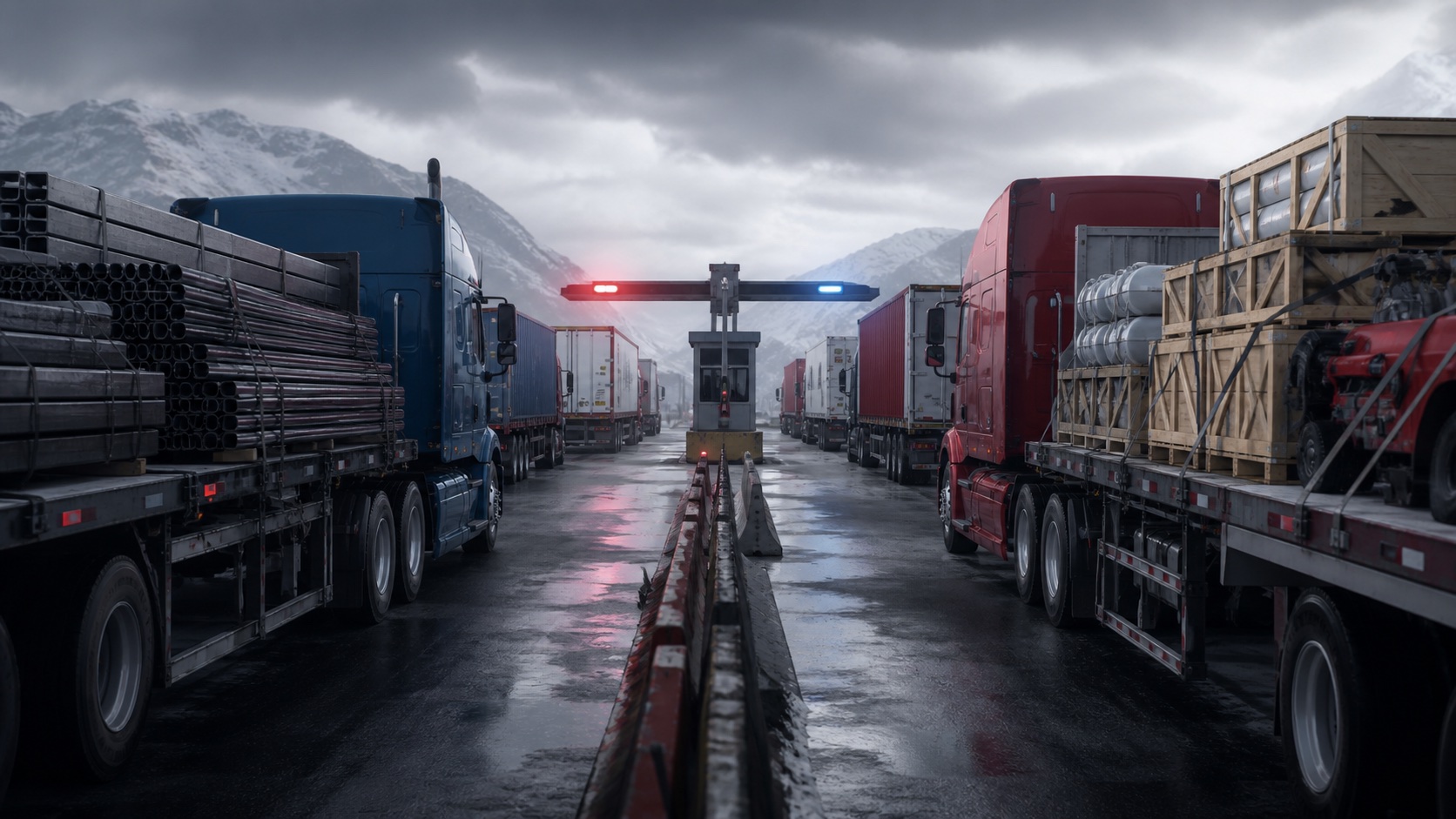
What Canada's September counter-tariffs cover
The United States introduced a 50 per cent tariff on roughly CAD 28 billion of Canadian products effective 22 August. Canada says its response will be equivalent in value and rate, although individual Canadian tariff rates vary across the selected list.
Steel and steel-intensive goods are central targets. The list also reaches dairy, household appliances, agricultural equipment, pulp and paper, electronics, seafood, apparel, personal-care products and everyday consumer items. Examples reported from the schedule range from machinery and cosmetics to toilet paper.
That breadth is deliberate. A retaliatory list must be large enough to match the trade value of the original action and create political pressure across several US industries. Governments also try to choose products that can be sourced domestically or from another trading partner, reducing the harm at home.
No list can avoid every Canadian cost. North American supply chains developed around short delivery distances, common standards and the expectation of preferential trade. A Canadian factory may use a specialised US component that cannot be replaced quickly, even when a similar product appears to exist elsewhere.
The rate applies according to the product's tariff classification and origin, not the brand name on the box. A US company can manufacture a covered product in a third country, while a foreign company can manufacture it in the United States. Importers need the customs code and rules of origin rather than assumptions based on a logo.
Who actually pays a tariff?
A tariff is collected from the importer when covered goods enter Canada. The US government or exporter does not automatically write a cheque to Ottawa. The importer's response determines where the economic burden goes next.
A retailer may raise the shelf price. A manufacturer may add the cost to a finished product. A large Canadian buyer may negotiate a discount from the US supplier, causing the exporter to absorb part of the loss. A business with a thin margin may stop importing the item entirely.
Exchange rates, inventory and competition affect how quickly consumers notice. Goods already landed in Canada before the effective date may initially sell at the old price. A retailer with strong alternatives may keep prices stable, while a niche product with no substitute can rise almost immediately after replacement stock arrives.
This is why a 25 per cent tariff does not guarantee an exact 25 per cent retail increase. The duty is calculated on the customs value, which is only one part of the final price. Freight, distribution, rent, tax and retailer margin are added later. Businesses may also spread the cost across a wider product range.
For consumers, the country of origin is more informative than the seller's nationality. Buying from a Canadian website does not prove that the item was made in Canada or that it avoided the tariff. Labels and product descriptions can help, but complex goods may contain components from several countries.
Which Canadian businesses face the greatest pressure
Manufacturers that import US steel, machinery or components are exposed twice: their input costs can rise while customers resist a higher price for the finished product. A firm bidding on a fixed-price contract may have little room to recover an unexpected border charge.
Small retailers have less purchasing power and may not be able to qualify a new supplier quickly. Changing a cosmetic, food or electrical product can involve safety standards, labelling, warranties and customer expectations. A substitute that is cheaper at the factory can be more expensive after testing and logistics.
Farmers can face higher costs for equipment and parts during narrow planting or harvest windows. A machine breakdown cannot always wait for a new overseas supply chain. Seafood processors and grocers must also consider perishability, cold storage and seasonal availability when changing sources.
Construction is sensitive to steel, appliances and equipment. If a tariff increases the cost of several inputs at once, builders may revise budgets or delay purchases. Existing contracts determine whether the contractor, developer or customer carries the increase.
Exporters have a different risk. The US tariff affects the competitiveness of Canadian goods in their largest market, while Canada's retaliation may raise the price of an imported input used to make those same exports. That squeeze explains why industry support and remission procedures matter alongside the political response.
What importers should do before 8 September
Confirm classification and origin. The Harmonized System code on a customs entry determines whether a product appears on the tariff schedule. Minor differences in material, use or processing can change the code. Importers should use a customs professional when classification is uncertain rather than selecting the most convenient category.
Map exposure beyond direct purchases. A Canadian company may buy from a domestic distributor that imports from the United States. Asking suppliers which lines are affected can reveal costs that are invisible in the company's own customs records.
Review contracts. Check which party is the importer of record, when title transfers and whether a tariff-change or force-majeure clause applies. Incoterms allocate delivery responsibilities but do not automatically solve every dispute over a newly imposed government charge.
Evaluate substitutes with the full landed cost. A supplier in Europe, Asia or Canada may avoid the retaliatory tariff but have a higher price, longer lead time or different certification. Freight, insurance, inventory financing and quality risk belong in the comparison.
Document exceptional harm. Canada has processes that can provide tariff relief or remission in limited circumstances, particularly when a product cannot reasonably be sourced elsewhere or the tariff creates severe economic harm. Relief is not automatic. A business needs evidence about volumes, alternatives, contracts, employment and the specific customs codes involved.
Avoid stockpiling without a demand plan. Bringing forward essential inventory before the effective date can reduce near-term exposure, but excess stock ties up cash and may become obsolete. The decision should reflect turnover, storage capacity and the likelihood that the dispute changes.
How households may see the effect
The first visible changes are likely in products with a high US share and rapid inventory turnover. Imported food, personal-care goods and clothing can move through retail systems faster than a large appliance already sitting in a warehouse.
Big-ticket goods may produce a more noticeable dollar increase even when they change slowly. Consumers replacing a refrigerator, washing machine or specialised tool should compare the model's origin, total delivered price, warranty and energy use. A cheaper alternative is not a saving if service or efficiency is materially worse.
Canadian-made is not always tariff-free in an economic sense. A domestic product may use US packaging, steel, chemicals or equipment. Producers can redesign a supply chain over time, but the transition itself costs money.
Households can respond without panic buying. Compare exact products, consider a repair where safe and economical, and ask retailers whether a quoted price is firm through delivery. For groceries and routine goods, switching brands or choosing a Canadian or non-US source can maintain competition.
Price changes should not be blamed automatically on the tariff. Seasonal supply, exchange rates and commodity costs move at the same time. A retailer claiming a government charge as the reason for an increase should be able to explain which product or input is affected.
Why “dollar for dollar” is political as well as economic
The phrase signals that Canada will not accept a one-sided trade cost. Matching the value makes the response easy to communicate and demonstrates that access to the Canadian market has consequences for US industries.
The product selection can also target states and congressional districts where exporters have political influence. The objective is to encourage US businesses and workers to ask Washington for a negotiated solution. Retaliation is most effective when the pressure is noticeable but does not cause greater damage at home.
That balance is difficult because the two economies are deeply connected. Hundreds of thousands of people cross the border on a typical day, and goods can cross more than once during production. Tariffs can protect one mill while increasing costs for a factory that turns steel into machinery.
The US measures cover only a minority of Canada's total exports to the United States—about 5 per cent by recent estimates—but the affected sectors are regionally important. A national percentage can understate the shock to a town, employer or province concentrated in one product.
Canada's response is therefore paired with support and diversification policy. Emergency help can preserve viable firms during a dispute, while investment in other markets reduces long-term dependence. Poorly designed support can also keep uncompetitive activity alive, so programmes need clear eligibility and results.
What happens to CUSMA?
The Canada–United States–Mexico Agreement, known as CUSMA in Canada and USMCA in the United States, was designed to provide predictable rules for continental trade. Tariffs imposed outside the agreement's ordinary preferences test that predictability even when a government cites another legal authority.
Companies make long-lived decisions on the assumption that a qualifying North American product can cross the border with known treatment. If tariffs become a frequent bargaining tool, firms may hold more inventory, duplicate production or invest farther from the border. Those choices improve resilience to one political shock but reduce the efficiency that made regional integration valuable.
Formal dispute settlement can clarify whether a measure is consistent with trade obligations, but a legal panel takes time. Governments may negotiate while proceedings continue, and a successful ruling does not instantly restore lost orders or delayed investment.
The scheduled review of the continental agreement gives all three countries another forum to address the dispute. It also adds leverage: uncertainty about the agreement's future can be used in negotiations, but prolonged uncertainty raises costs for businesses in all three economies.
Effects outside North America
Australia, the UK, the European Union and Asian exporters may gain opportunities if Canadian buyers seek alternatives to US goods. A tariff creates a price opening, but suppliers still need capacity, Canadian certification, reliable shipping and local distribution.
Trade can also be diverted in less helpful ways. US producers shut out of Canada may discount goods in another market, pressuring local manufacturers there. Canadian exporters facing US duties may redirect output and change global prices for steel, forestry or food products.
For Australia, the dispute is a reminder that a security alliance does not guarantee frictionless commerce. Exporters should assess trade exposure by product and legal instrument rather than assuming political closeness removes tariff risk.
The larger concern is precedent. If major economies normalize broad tariffs against close partners, companies everywhere will price political risk into supply chains. That can mean higher inventories, slower investment and less productivity even after a particular tariff is removed.
What could end the dispute
A negotiated package could reduce or remove both sides' measures. That might involve tariff quotas, exemptions, sector arrangements or commitments on other trade irritants. A complete return to the old conditions is possible but should not be assumed while no active agreement is announced.
Domestic political pressure in the United States may grow as Canadian counter-tariffs affect exporters. Canadian pressure may also rise if costs spread through manufacturing and retail. Each government will try to show that the other side is experiencing more pain, which can make early compromise politically awkward.
Court or trade-panel decisions could narrow the legal options, but litigation is rarely fast enough for a company deciding what to order next month. Businesses need a workable plan for the published 8 September rules and a separate plan for how to unwind changes if tariffs are later removed.
Readers can follow the broader policy effects through Sarvalaya's economics coverage. For now, Canada's new counter-tariffs are concrete rather than theoretical: the rates, product lines and start date are known.
The best response is equally concrete. Importers should verify codes and contracts, households should compare origin and total price, and policymakers should measure whether retaliation creates leverage without eroding Canadian competitiveness. Tariffs can be switched off by a government order; the supply chains and investment decisions they change can take years to rebuild.
This article provides general information, not legal, customs or financial advice. Businesses should obtain advice based on their products, contracts and import records.