Top 10 Electric Vehicles for Australian Families in 2027
Australian families now have a genuine choice of electric SUVs rather than one obvious default. Tesla Model Y remains the best all-round package for efficiency, space and charging integration, but BYD Sealion 7, Kia EV5, Geely EX5 and XPeng G6 offer strong alternatives. Larger families should examine the Kia EV9.
This 2027 guide is based on vehicles on sale or established in Australia by August 2026, not speculative future models. Prices, variants, safety ratings and incentives can change before purchase. A long range claim matters less than whether the car fits child seats, luggage, home charging and the family's regular highway route.
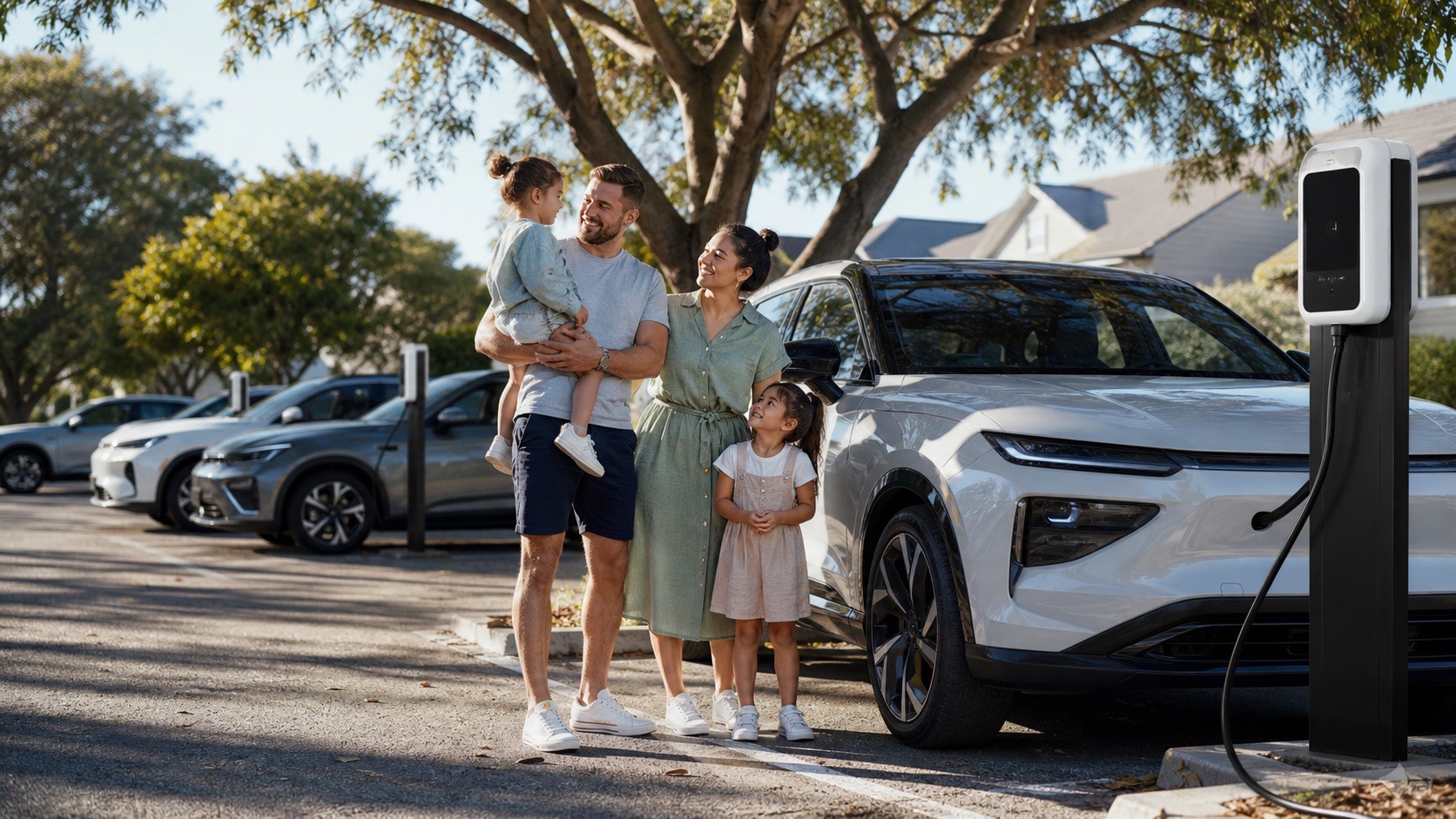
Best family EVs to shortlist
| Vehicle | Best for | Main compromise |
|---|---|---|
| Tesla Model Y | Best all-round family EV | Minimalist controls and firm ownership ecosystem |
| BYD Sealion 7 | Equipment and performance value | Efficiency and software need comparison |
| Kia EV5 | Practical square family packaging | Variant charging performance differs |
| Geely EX5 | Affordable compact family use | Newer Australian support network |
| Zeekr 7X | Premium technology and rapid charging | Price and brand familiarity |
| XPeng G6 | Efficient value alternative | Developing dealer footprint |
| Hyundai Ioniq 5 | Fast road-trip charging | Price and wide exterior footprint |
| Kia EV9 | Seven-seat electric family travel | Size, weight and cost |
| Skoda Enyaq | Conventional European usability | Range and value depend on variant |
| Hyundai Elexio | Family-focused new option | Shorter local ownership history |
Australia's EV market moved quickly in 2026. Battery-electric and plug-in hybrid sales together reached almost one-third of new vehicles in July, with Chinese brands taking a much larger share. Competition is improving choice, while making service, insurance and resale research more important.
1. Tesla Model Y: best all-round family EV
Model Y combines efficient energy use, a large cabin, useful under-floor and front storage, a mature app and access to Tesla's charging network. Its route planning and charger integration reduce cognitive load on long trips. The refreshed generation improves comfort and cabin refinement over earlier cars.
The interface places many controls on the central screen, which not every driver likes. Service is direct rather than a traditional dealer experience, and repair or insurance costs should be quoted before purchase. Variant range and performance differ.
For a family that can charge at home, Model Y remains the benchmark because the whole ownership system works coherently. Test rear visibility, ride, controls and child-seat access rather than buying from specifications alone.
2. BYD Sealion 7: best equipment and performance value
Sealion 7 is a medium electric SUV with a spacious interior, strong standard equipment and a choice of powertrains. BYD's blade-style lithium iron phosphate battery emphasises thermal stability and avoids nickel and cobalt in the cathode.
Its sleek shape and generous cabin make it a credible Model Y alternative. Energy efficiency, boot packaging and charging curve should be compared for the exact variant; a high peak charging number does not describe the entire stop.
BYD's Australian network has expanded, but families should inspect service intervals, wait times, insurance and tyre costs. Sealion 7 is compelling when comfort and equipment matter more than absolute efficiency.
3. Kia EV5: best practical family shape
Kia EV5 uses a more upright SUV form than many coupe-like rivals. The square cabin, rear-seat space and flat-floor packaging suit child seats, school bags and holiday luggage. Kia's established Australian dealer network is reassuring for buyers moving to their first EV.
Australian variants and battery sources can differ from versions tested overseas. Check DC charging speed, vehicle-to-load capability, towing approval and spare-wheel solution for the chosen grade.
EV5 is a particularly rational suburban family vehicle: easy to enter, easier to pack than its exterior suggests and familiar to operate. A real motorway charging test is wise if regular interstate driving is expected.
4. Geely EX5: best affordable compact family EV
Geely EX5 has become a strong-selling electric SUV by combining approachable pricing, a roomy cabin and useful standard technology. Its compact exterior suits urban parking while the electric platform creates good interior space.
Geely is a major global manufacturer, but the Australian brand and retail experience are newer. Long-term resale, parts supply and repair pathways have less local history than Toyota, Hyundai or Kia.
The EX5 makes sense for families prioritising value and mostly charging at home. Test driver-assistance calibration, infotainment, boot shape and rear-seat comfort. A lower purchase price should be considered alongside insurance and expected depreciation.
5. Zeekr 7X: best premium technology alternative
Zeekr 7X brings a premium cabin, high-performance electrical architecture and rapid charging potential to the medium-SUV segment. It offers the space and technology expected of a more expensive luxury badge, with powerful variants available.
Fast charging requires a compatible high-output station and a battery at the right temperature and state of charge. Australian infrastructure will not reproduce the peak number at every stop. Complexity and large wheels can also increase tyre and repair costs.
Choose the 7X if cabin quality, road-trip charging and performance justify the price. Confirm service locations and insurance in your postcode before being persuaded by equipment alone.
6. XPeng G6: best efficient value challenger
XPeng G6 targets the heart of the electric family-SUV market with aerodynamic design, useful space, competitive range and strong charging capability. It often undercuts established premium rivals while retaining extensive equipment.
Software is central to the experience. Evaluate navigation, smartphone integration, driver monitoring and assistance on Australian roads. Overactive warnings can matter more in daily use than a feature count.
XPeng's local support footprint is still developing. Ask who services collision, glass and battery faults and how far the nearest centre is. The G6 is a strong choice for a technology-comfortable buyer after a thorough test drive.
7. Hyundai Ioniq 5: best for repeated road trips
Ioniq 5's 800-volt-class architecture supports very rapid DC charging at suitable stations, and its long wheelbase creates a spacious, flexible cabin. Vehicle-to-load power can run appliances or camping equipment within limits.
The car is wider than photographs suggest and can be awkward in narrow car parks. Purchase prices rise quickly in high-capacity or performance grades, while fastest charging depends on infrastructure.
Families making regular highway journeys should place Ioniq 5 high on the list. Its ability to sustain a good charging curve can shorten stops more than a small difference in rated range. Check boot layout and rear-seat comfort with the family's actual equipment.
8. Kia EV9: best seven-seat electric SUV
EV9 is one of the few true three-row battery-electric vehicles available in Australia. It provides adult-usable space, a large cabin and long-distance charging technology in a square SUV form. For a large family determined to avoid petrol, it occupies a valuable niche.
Size and weight affect efficiency, parking, tyres and price. With all three rows occupied, luggage space should be tested against prams or holiday bags. Towing reduces range materially, as it does in every EV.
EV9 works best when the household genuinely needs seven seats. A five-seat EV is cheaper and more efficient for most families. Measure the garage, obtain an insurance quote and plan charging on regular towing routes.
9. Skoda Enyaq: best conventional European feel
Skoda Enyaq offers a practical cabin, familiar controls and European road manners on a dedicated electric platform. It appeals to buyers who want an EV that feels like a well-resolved family wagon rather than a device dominated by a centre screen.
Australian pricing and variant selection determine its value against newer Chinese competitors. Software and charging specifications have improved across model updates, so older overseas reviews may not describe the current car.
The Enyaq's strength is everyday usability rather than one class-leading figure. Check rear space, cargo features, charging route planning and local service. It can be a comfortable long-term choice for families already confident in the Volkswagen Group network.
10. Hyundai Elexio: best new family-focused option
Hyundai Elexio expands the brand's electric SUV range with a family-focused model positioned around space, technology and competitive value. It benefits from Hyundai's established Australian operation even though the model itself has less local history.
New vehicles need real-world evidence. Compare energy use, charging behaviour, boot measurements and driver-assistance calibration rather than relying on launch claims. Early buyers should ask about parts and software-update processes.
Elexio deserves a test drive alongside EV5, EX5 and G6. It may offer a useful balance of mainstream support and newer-platform value, but the exact 2027 specification and price must lead the decision.
Range and charging: use your real route
Official range tests help comparison but do not promise a family result. Highway speed, cold or very hot weather, roof racks, hills, towing and cabin heating or cooling reduce range. Plan with a reserve rather than arriving near zero.
Home charging is the ownership advantage. A qualified electrician should assess the switchboard, phase supply, cable route and controlled-load or solar options. Many households need less than the maximum wallbox power because the car sits overnight.
For road trips, examine charging locations, reliability and amenities on the actual route. A car with a stable 20–80 per cent curve can outperform one advertising a higher momentary peak. Carry accounts or cards for more than one network.
Family, safety and cost checklist
Install every child seat before signing. Check top-tether and ISOFIX access, centre-seat width, rear air vents, door opening and the boot with a pram. Review the current Australasian New Car Assessment Program rating for the exact model and year; protocols evolve, so stars from different test years are not perfectly equivalent.
Compare total cost using finance, depreciation, insurance, tyres, servicing, electricity and any road-user charge or tax treatment applicable in your state. Federal fringe-benefits tax settings affect eligible employer-provided vehicles but do not make a car free.
Battery warranties commonly run for years with a retained-capacity threshold, but conditions vary. Read exclusions for commercial use, servicing and extreme damage. This guide is general information, not personal financial advice.
Which family EV should Australians choose for 2027?
Model Y remains the best all-rounder, Sealion 7 provides equipment value, EV5 offers practical packaging and Ioniq 5 excels at high-speed charging. EX5 and G6 intensify value competition, while EV9 is the clear large-family specialist.
Test the car with the people and equipment it will carry, then model charging on the hardest regular journey. A slightly shorter-range EV that fits family life and has dependable local support is a better purchase than a specification winner. Read more in Sarvalaya's Australian economics and household-cost coverage.