Top 10 Evidence-Based Habits for Better Sleep
Better sleep usually comes from strengthening the body's timing and reducing the struggle around bedtime—not buying a perfect supplement or forcing eight hours. The most useful habits are a consistent wake time, morning light, regular activity, sensible caffeine timing and a bedroom associated with sleep.
Most adults should regularly get at least seven hours, though individual needs vary. Sleep duration is only part of health: persistent trouble falling asleep, repeated waking, loud snoring or severe daytime sleepiness deserves assessment. The habits below can help ordinary sleep disruption but are not a treatment plan for every disorder.
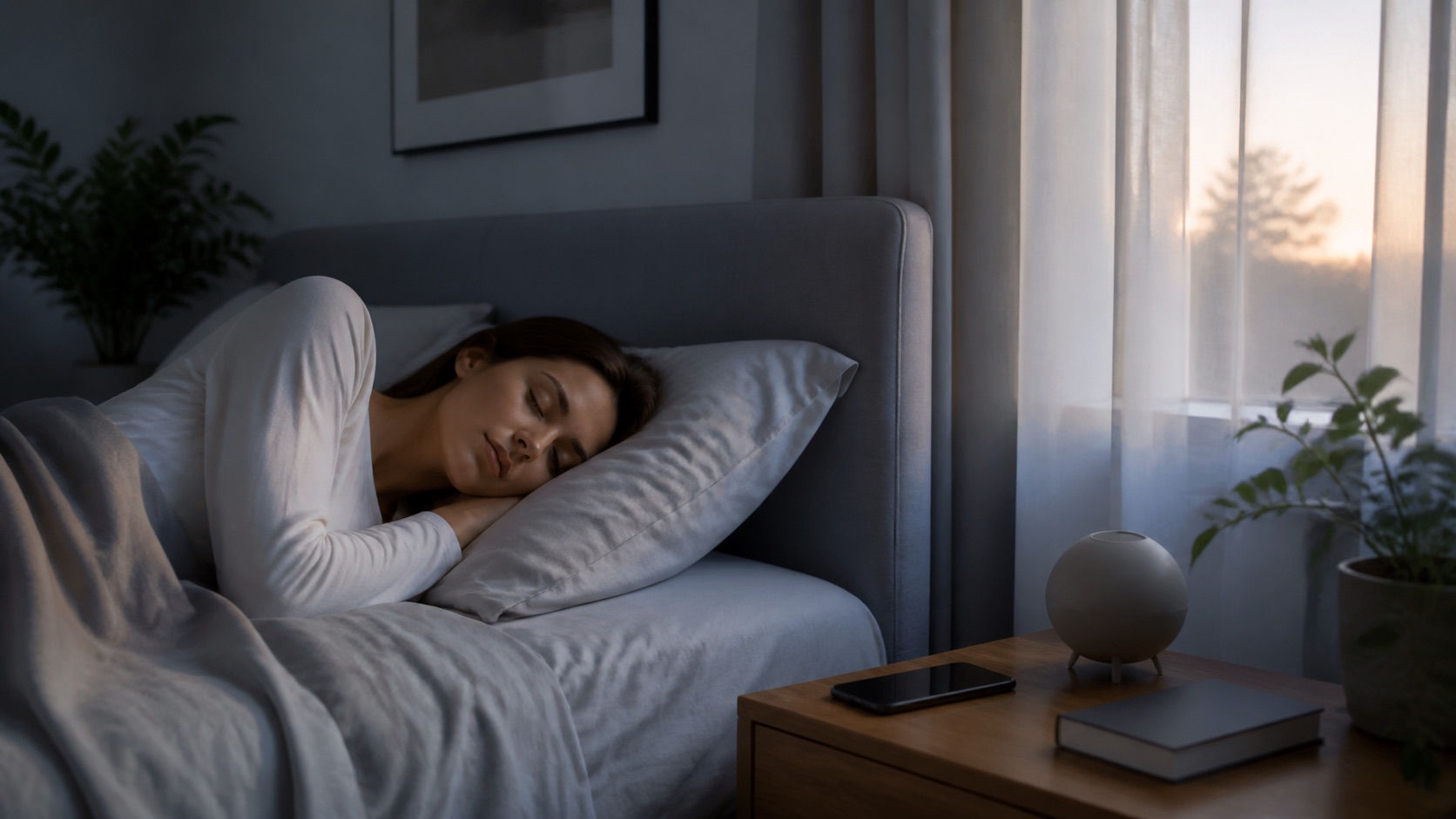
Better sleep habits at a glance
| Habit | Why it helps | Practical starting point |
|---|---|---|
| Keep a stable wake time | Anchors the body clock | Keep weekends within about an hour |
| Seek morning daylight | Strengthens circadian timing | Go outside after waking |
| Exercise regularly | Builds sleep drive and health | Move most days at a sustainable level |
| Set a caffeine cut-off | Reduces lingering stimulation | Move the last caffeine earlier |
| Limit alcohol and nicotine | Protects sleep continuity | Avoid using either as a sleep aid |
| Create a wind-down | Lowers arousal | Repeat a short quiet sequence |
| Optimise the bedroom | Reduces interruption | Dark, quiet, comfortable and cool |
| Reserve bed for sleep | Rebuilds the sleep association | Leave briefly if fully awake and frustrated |
| Use naps deliberately | Prevents reduced night sleep drive | Keep them early and short if needed |
| Seek evidence-based care | Finds treatable disorders | Discuss persistent symptoms with a clinician |
Change one or two habits at a time and keep a simple diary for two weeks. Improvement is easier to see across a pattern than after one difficult night.
1. Keep a consistent wake time
The body's circadian system predicts when to become alert and when to prepare for sleep. A stable wake time is one of the strongest daily signals. Large weekend sleep-ins can shift the clock later, making Sunday night and Monday morning harder.
Choose a wake time that is compatible with enough sleep and maintain it within roughly an hour where life permits. Get out of bed rather than repeatedly snoozing. A temporary late night does not need to become an entire day in bed.
Consistency should not become punishment. Shift workers, parents, carers and people with illness may not control schedules. The aim is the most stable pattern realistically available, not anxiety about perfect compliance. If you routinely cannot wake without severe sleepiness, the schedule may not allow enough time or a sleep disorder may be present.
2. Get bright light early in the day
Light is the main environmental cue for the body clock. Outdoor morning light is much brighter than ordinary indoor lighting, even on many cloudy days. Exposure after waking can support earlier alertness and help the body prepare for sleep later.
Open curtains and spend time outside during a walk, breakfast or commute. The exact timing and amount depend on season, latitude and the person's sleep pattern; regular outdoor exposure is a useful general principle.
Reduce very bright light late at night if it keeps you alert. Screens matter partly because of light and partly because stimulating content delays bedtime. People with eye disease, bipolar disorder or specialised light-treatment needs should seek professional advice before using high-intensity light boxes.
3. Exercise regularly
Regular physical activity supports sleep quality, mood and cardiometabolic health. It can increase sleep pressure and reduce stress. The benefit comes from a sustainable routine, not exhausting yourself on a single day.
Combine aerobic movement with strength work according to health and ability. Walking outdoors adds daylight exposure. Some people sleep well after evening exercise; others remain activated after a late vigorous session. Observe your own pattern rather than following a universal prohibition.
Sudden intense training, pain or overtraining can disrupt sleep. If exercise causes chest pain, unusual breathlessness or worsening symptoms, obtain medical guidance. The sleep goal should complement, not override, safe physical-activity advice.
4. Move caffeine earlier
Caffeine blocks adenosine signalling, reducing the feeling of sleep pressure. Its effects can persist for hours and vary widely between people. Coffee is not the only source: tea, energy drinks, cola, chocolate, pre-workout products and some medicines contribute.
If sleep is difficult, move the last caffeine at least six to eight hours before bedtime as an experiment. People who are sensitive may need an earlier cut-off. Reduce gradually if heavy daily use causes withdrawal headaches.
Do not use caffeine to compensate indefinitely for insufficient sleep or severe daytime sleepiness. That cycle can mask a disorder and push bedtime later. Pregnant people and those with certain health conditions should follow clinician or public-health guidance on total intake.
5. Do not use alcohol or nicotine as sleep aids
Alcohol can shorten the time it takes to fall asleep, but it often fragments the second half of the night, worsens snoring and sleep apnoea, and increases bathroom trips. More alcohol is not better sleep.
Nicotine is a stimulant and overnight withdrawal can also disturb rest. Smoking or vaping near bedtime is therefore not a reliable calming strategy. Cannabis and over-the-counter products have their own effects, interactions and evidence limitations.
Move alcohol away from bedtime, reduce quantity and include alcohol-free days under applicable health guidance. Anyone who may be dependent should seek medical support rather than stopping abruptly, because withdrawal can be dangerous. Discuss sedating medicines and substances honestly with a clinician.
6. Use a short, repeatable wind-down
A wind-down creates a bridge between problem-solving and sleep. It may include dimming lights, preparing for tomorrow, a warm shower, light reading, quiet music or a brief relaxation exercise. Repetition matters more than creating an elaborate ritual.
Write unresolved tasks on paper so the brain does not need to rehearse them. Put work messages and emotionally activating media outside the routine. If a phone is needed for audio or an alarm, enable do-not-disturb and keep it out of reach.
Trying very hard to sleep can increase arousal. The routine should be an invitation, not an exam. Go to bed when sleepy rather than merely because the clock reaches an aspirational time.
7. Make the bedroom dark, quiet and comfortable
A bedroom should reduce signals that compete with sleep. Block intrusive light, address intermittent noise and choose a temperature and bedding that feel comfortable. A cooler room suits many adults, but there is no single perfect number for every climate or person.
Blackout curtains, an eye mask, earplugs or steady background sound may help. Safety comes first: alarms, children, respiratory devices and heatwave guidance should not be compromised. Renters can use removable solutions.
Mattress marketing often exceeds evidence. Replace bedding when it is uncomfortable or unsupportive, not because a fixed expiry date demands it. Pets improve comfort for some people and fragment sleep for others; use observed sleep, not guilt, to decide arrangements.
8. Rebuild the link between bed and sleep
When someone spends hours awake, worrying or working in bed, the bedroom can become a cue for alertness. Stimulus-control methods used in cognitive behavioural therapy for insomnia aim to reverse that association.
Use the bed for sleep and intimacy rather than email, television and extended scrolling. If you are fully awake and becoming frustrated, get up and do something quiet in dim light, returning when sleepy. Avoid clock-watching.
This guidance needs adaptation for disability, pain, caring duties or fall risk. People with bipolar disorder, epilepsy or other conditions in which sleep restriction may be risky should not undertake a formal insomnia programme without clinical support.
9. Nap deliberately
Naps can improve alertness after a poor night or during shift work. They can also reduce sleep pressure and make nighttime insomnia worse, particularly when long or late.
If naps are affecting bedtime, keep them earlier in the afternoon and relatively short, or pause them during a structured sleep intervention. Someone who sleeps well at night does not need to eliminate a culturally normal nap because of generic advice.
Unplanned daily dozing, especially while driving, working or talking, is different. It can indicate insufficient sleep, sleep apnoea, medication effects or another health problem. Do not drive when sleepy; stop safely and address the cause.
10. Get the right help when habits are not enough
Chronic insomnia is not simply bad discipline. Cognitive behavioural therapy for insomnia, or CBT-I, is a structured treatment addressing sleep timing, behaviours and unhelpful beliefs. It has stronger long-term evidence than relying on sedatives for many adults.
Seek assessment for trouble lasting months, severe daytime impairment, loud snoring, breathing pauses, restless legs, unusual movements, nightmares, mood changes or reliance on substances. Children, pregnant people and older adults have distinct considerations.
Sleeping tablets can be appropriate in selected circumstances but carry benefits and risks. Do not combine sedatives with alcohol or change prescribed medicine without the prescriber. Supplements such as melatonin are not interchangeable across products or conditions; timing and diagnosis matter.
A two-week sleep reset
For the first week, fix wake time, obtain morning light and record bedtime, estimated sleep, wake time, naps, caffeine and alcohol. Do not obsess over minute-level accuracy. The record is meant to identify patterns.
In the second week, move caffeine earlier, add a 30-minute wind-down and leave bed briefly when prolonged wakefulness becomes frustrating. Keep exercise regular. Judge the pattern by daytime function and several nights, not whether every night is excellent.
If the diary shows adequate opportunity but continuing poor sleep, take it to a healthcare professional. It can clarify timing, symptoms and treatment options.
Better sleep is a pattern, not a performance
The strongest foundations are consistent timing, daylight, activity and reduced stimulation. Bedroom changes and a calm response to wakefulness support them. One disrupted night is normal and does not undo the routine.
This article provides general health information and is not a diagnosis or personalised treatment. Persistent symptoms, breathing concerns or dangerous sleepiness require professional assessment. Explore more evidence-aware guidance in Sarvalaya's health section.