Nepal–Tibet Floods: What Travellers Need to Know
Deadly flash floods near the Nepal–Tibet border have swept through mountain valleys, damaged roads and communications, and left residents and foreign travellers missing. Australians are among those unaccounted for, alongside people from the United Kingdom, Canada and several other countries.
The scale remained uncertain at midday on 27 August 2026. Early official and media counts reported at least 160 deaths across the disaster area and hundreds of people missing, but damaged infrastructure and poor communications mean those numbers may change substantially as rescuers reach isolated communities.
For travellers, the immediate advice is not to approach the affected Rasuwa border region, floodwater, landslide zones or damaged roads. People already nearby should follow local authorities and trekking operators, conserve phone power, and tell family and consular officials where they are as soon as communications allow.
What is known about the Nepal–Tibet floods
The flooding struck on 26 August in and around Rasuwa district, north of Kathmandu, and across the border in Tibet. Rasuwa contains a major road connection with China and access to trekking areas including the Langtang valley. It is not the standard approach to Mount Everest, a distinction that matters when travellers try to understand which itineraries are exposed.
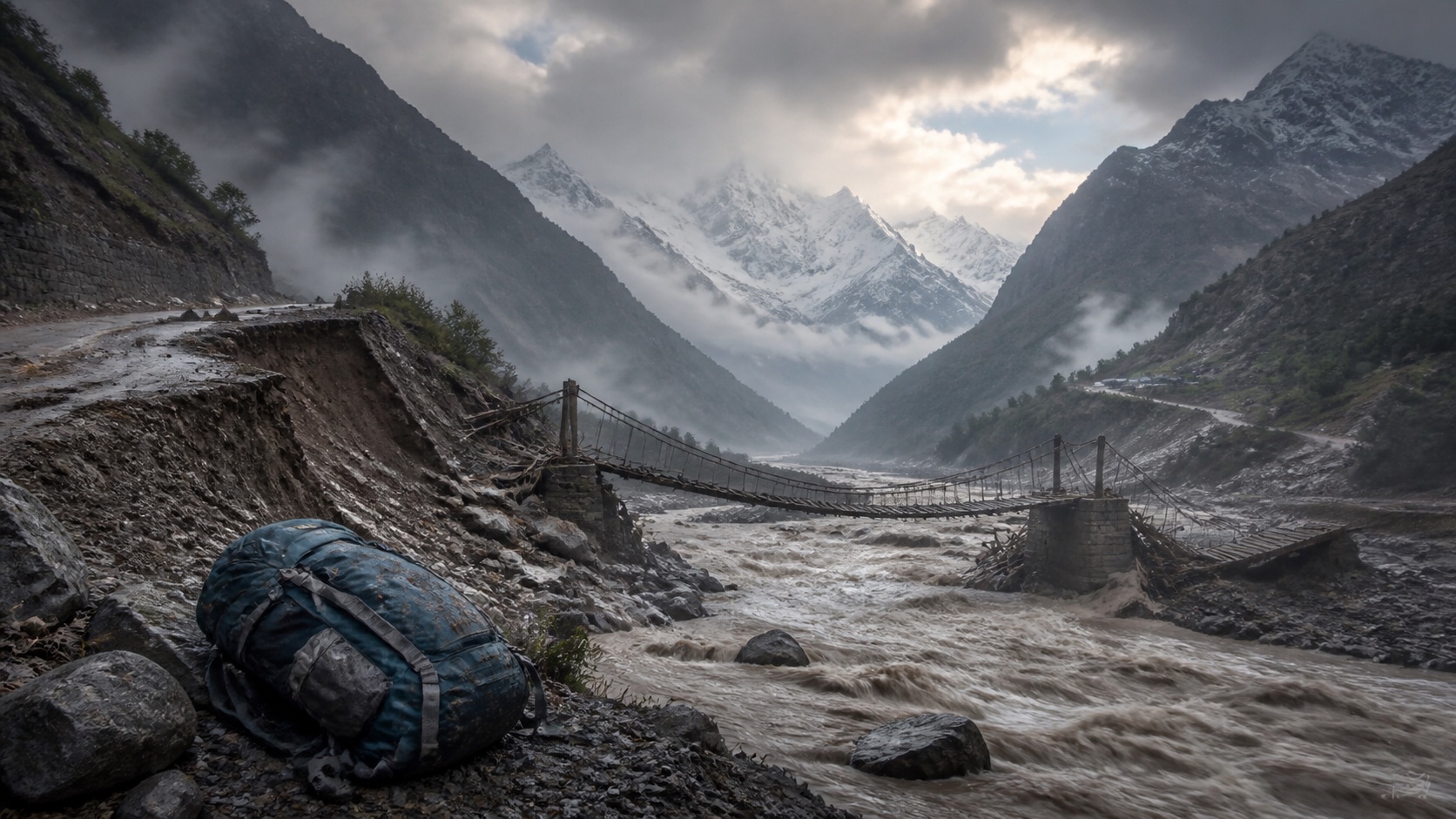
Water, mud and debris have cut transport links and damaged electricity, phone and internet services. Bridges and sections of road may be unsafe even if they remain visible. The loss of communications also means a person described as “missing” may be alive and sheltered but unable to contact an operator, family or embassy.
Australian officials were working to account for dozens of citizens, including members of a trekking group. The group also included Nepalese guides and travellers from the UK, Singapore, the United States and Russia. UK and Canadian officials have likewise reported contact with families and are checking registrations and local information.
All such totals are provisional. Nationality counts can overlap, change when manifests are corrected, or fall as travellers reconnect. Responsible reporting should not turn an initial list into a presumed death toll or imply that foreign visitors are the only people affected. Local families, guides, porters, drivers and rescue workers carry the largest burden.
What may have caused the disaster
Early satellite analysis suggested that a large mass of ice may have broken from a Himalayan glacier, displacing water and debris into the valley below. This kind of event can create a sudden flood with far less warning than a river rising during prolonged rain.
That is an initial explanation, not a final scientific finding. Investigators will need to examine satellite images, weather, terrain and any upstream lake or ice blockage. A slope failure, glacial-lake outburst or combination of processes can look similar in the first hours from a distance.
Authorities were also monitoring a possible upstream blockage that could release another surge. A temporary natural dam of ice, rock and debris can hold back water and then fail without much notice. That possibility is one reason travellers should not return to a riverbank simply because the first flood has receded.
Climate change is increasing heat and altering glaciers across the Himalayas, which can contribute to unstable ice and changing flood hazards. It would still be premature to attribute one event entirely to climate change before the local mechanism is established. The durable conclusion is that warming mountain regions require better monitoring, warning systems, route planning and evacuation capacity.
Why rescue operations are so difficult
Mountain rescue depends on access, weather and accurate location information. A damaged road may prevent ambulances and heavy equipment from reaching a valley. Cloud, rain and narrow terrain can limit helicopters. A functioning aircraft cannot safely solve every problem if there is nowhere to land or visibility is poor.
Rescuers must also assess secondary hazards. Saturated slopes can fail after the main flood. Riverbanks can collapse under a person's weight. Damaged bridges may carry one light vehicle and fail under the next. Moving too quickly can place survivors and rescue teams in a new emergency.
Communications failures create a parallel challenge. Trekking permits, hotel records, tour manifests, border data and family reports may use different spellings or passport details. Independent travellers may not have registered an itinerary. A group can split before an incident, so the last known location may not describe every member.
This is why consular agencies ask for specific information: full name, date of birth, passport number, phone numbers, tour company, guide, route, accommodation and the time of last contact. A clear factual record is more helpful than repeated unverified posts across multiple public groups.
Advice for travellers already in Nepal
Avoid the affected district unless local authorities specifically direct otherwise. Do not travel north to observe the damage or attempt a private search. Extra traffic can obstruct emergency vehicles, strain accommodation and expose well-intentioned visitors to landslides, contaminated water and unstable structures.
If you are near the affected area, move to higher stable ground when advised and stay away from river channels. A receded river can rise again. Never walk or drive through floodwater; depth, current and road damage are difficult to judge, and glacial debris can make the flow unusually destructive.
Follow local emergency instructions and the advice of a reputable operator. Keep a charged phone and power bank, but preserve battery by reducing screen use and switching off unnecessary connections. Send a short message with location, condition and immediate plan when a signal appears rather than making repeated long calls.
Use safe water and food. Flooding can contaminate wells, pipes and storage tanks. Bottled or properly treated water is safer where supplies are available. Seek medical help for injuries, symptoms of infection or significant cold exposure; small wounds can become serious when evacuation is delayed.
Do not rely on an ordinary map application to show that a mountain road is open. A digital route can remain visible after a bridge is destroyed. Confirm conditions with authorities, accommodation providers and operators at both ends of a proposed journey.
What families should do if someone is missing
First, try direct contact through more than one low-bandwidth channel: text message, messaging app and email. Do not keep calling continuously, because a traveller may be conserving power or using the phone to coordinate with rescuers.
Contact the tour company, guide and most recent accommodation. Ask for the last confirmed sighting, planned route, group roster and whether the person changed plans. Record the time and source of every update so a rumour is not repeated later as a confirmed fact.
Australians with urgent consular needs can call the 24-hour Consular Emergency Centre on 1300 555 135 from Australia or +61 2 6261 3305 from overseas. Give officials one primary family contact where possible; multiple relatives reporting the same person with different details can slow reconciliation.
British and Canadian families should use their governments' current emergency consular channels. US citizens can contact the US embassy and State Department emergency services. Travellers of any nationality should also be reported through local police or disaster-response procedures when instructed.
Prepare a compact information file containing a recent photograph, passport details, date of birth, mobile number, medical needs, travel insurance, booking records, operator and route. Share sensitive identity information only with legitimate authorities, insurers and verified operators, not public social-media accounts.
Be cautious with fundraising requests and “rescue coordinators” who appear after a disaster. Verify an organisation independently before sending money or passport copies. Genuine rescuers do not need families to pay an unknown intermediary to place a name on an official search list.
Travel insurance and operator responsibilities
Travellers with an affected booking should contact the airline, tour operator and insurer before cancelling or changing arrangements. Coverage depends on the policy wording, purchase date, official travel advice and the reason a trip cannot proceed. A fear of travelling may be treated differently from a road closure or government direction.
Keep receipts for additional accommodation, transport, food and communications. Ask the operator to state in writing whether the itinerary is cancelled, postponed or rerouted and why. Insurers often need evidence of the event and the supplier's response before assessing a claim.
Adventure policies can contain altitude, trekking, guide and search-and-rescue conditions. A standard international policy may not cover a high-altitude route or helicopter evacuation. Travellers planning a future Himalayan trek should check maximum altitude and approved activity definitions, not just the presence of the word “hiking”.
Operators should account for every guest and local staff member, maintain emergency contacts and avoid pushing a group through a closed area to preserve a schedule. A safe reroute may involve losing part of a paid itinerary. That commercial loss is preferable to treating a newly damaged valley as a normal trekking environment.
General insurance information cannot determine an individual claim. A policyholder should obtain the insurer's written decision and use the applicable complaints process if the wording and outcome appear inconsistent.
Should travellers cancel other Nepal trips?
Nepal is geographically varied, and disruption in Rasuwa does not automatically close the entire country. Kathmandu, the Annapurna region and other destinations can have different conditions. At the same time, national transport and emergency resources may be redirected, and monsoon-season weather can create separate landslide risks.
Travellers should make a route-specific assessment based on official advice, current road and weather information, and an operator with people on the ground. An itinerary should include alternative routes, extra time and a clear trigger for turning back.
Postponement may be sensible if the trip depends on the Rasuwa crossing, Langtang access or infrastructure now being inspected. It may not be necessary for a trip in a distant region with confirmed access and no official warning. The decision can change quickly as surveys reveal more damage.
Register or subscribe for travel-advice updates before departure. Leave a detailed itinerary and check-in schedule with someone at home. A satellite communicator or personal locator beacon can add resilience in remote terrain, but travellers must understand how it works and which local rescue network receives an alert.
A safer model for Himalayan tourism
This disaster raises questions beyond one itinerary. Popular mountain regions need flood and glacial-lake monitoring, warning systems that reach villages and visitors, robust bridges, redundant communications and evacuation plans practised before a crisis.
Tourism businesses also need realistic margins. A schedule that leaves no spare day encourages poor decisions when weather closes a pass or damages a road. Smaller groups, trained local leaders and clear authority to abandon a route can reduce risk.
Visitors have responsibilities too. They should respect closures, carry appropriate equipment, disclose medical needs and resist the assumption that paying for a tour transfers every risk to someone else. Local guides offer critical expertise, but they should not be pressured to enter unsafe terrain for a customer's timetable.
The current priority is rescue, identification and support for affected communities. Numbers will change as communications return, and early explanations of the flood may be revised. Sarvalaya will follow confirmed developments through its news coverage.
For now, the most useful response is disciplined: stay out of the disaster zone, follow official directions, give rescuers accurate information and avoid spreading names or casualty claims that families have not received through proper channels.