Top 10 Solar Panels for Australian Homes in 2026
The best solar panel for an Australian home is an approved model supplied by a capable installer, matched to the roof and supported for years. A premium panel cannot rescue poor shade design, unsafe mounting or a company that disappears before a warranty claim.
AIKO, REC and Maxeon lead this buyer's guide for high efficiency and premium positioning. Qcells, Trina, Jinko, LONGi, Canadian Solar and JA Solar offer strong mainstream choices, while Winaico stands out where local distribution and product support are valued. The exact model matters more than the logo.
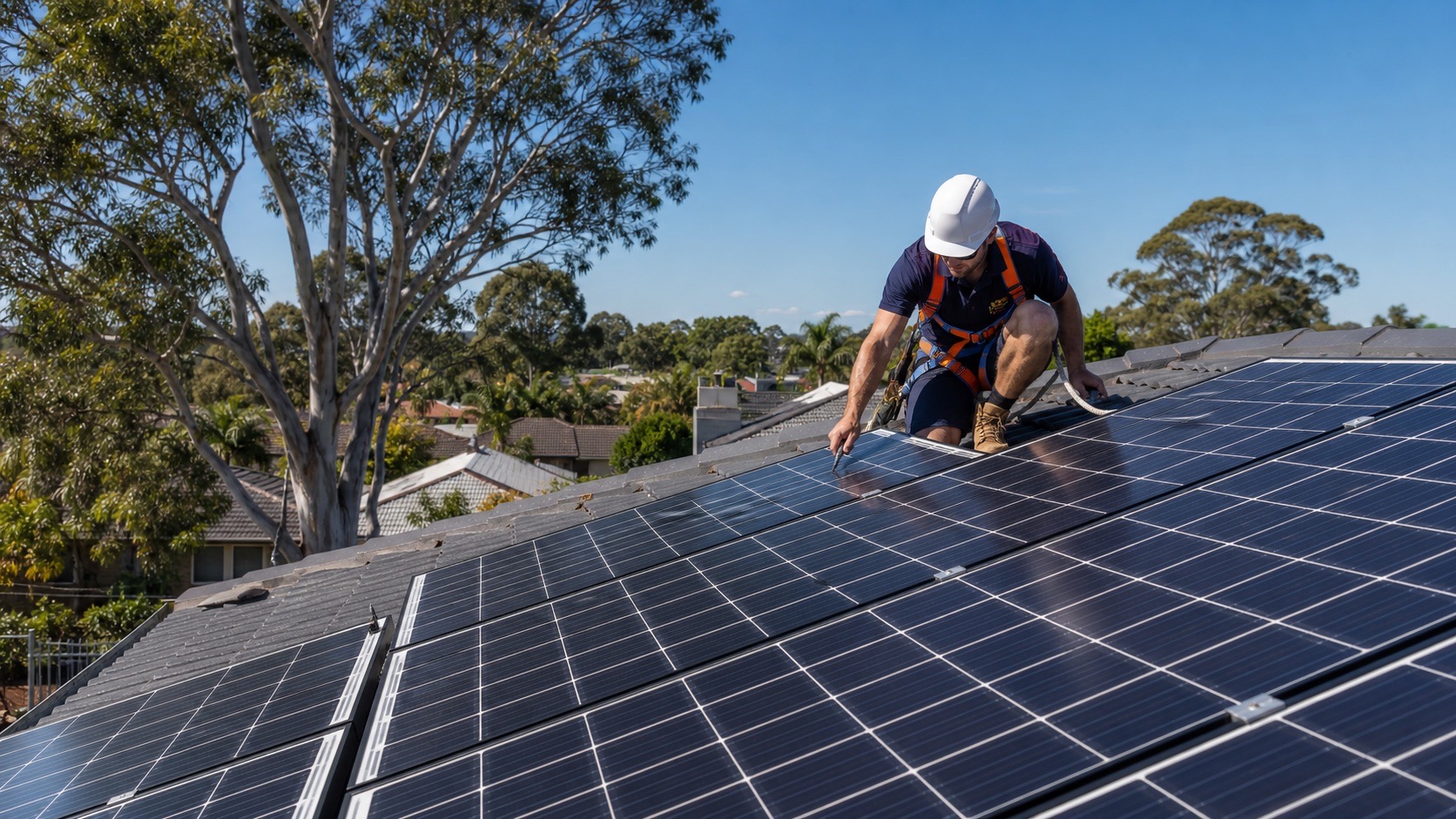
Best solar panel brands for Australia
| Brand | Best for | Main consideration |
|---|---|---|
| AIKO | High output on limited roof area | Premium model pricing and installer availability |
| REC | Premium all-round systems | Higher upfront cost |
| Maxeon | Long-life premium ownership | Price and selected distribution |
| Qcells | Bankable mainstream quality | Compare exact product series |
| Trina Solar | Strong value and broad availability | Installer and model selection matter |
| JinkoSolar | Competitive modern technology | Product tiers differ |
| LONGi | Efficient mainstream modules | Confirm local warranty pathway |
| Canadian Solar | Established value range | Do not infer origin from the name alone |
| JA Solar | Cost-effective established panels | Compare specifications beyond wattage |
| Winaico | Local support-focused buyers | Smaller installer footprint |
Australia's Clean Energy Council maintains a dynamic list of approved modules. More than 1,500 models can be listed at a given time, and approvals can change. Verify the precise model number on the day of contracting, not merely the manufacturer.
1. AIKO: best for high efficiency
AIKO's all-back-contact module designs place electrical contacts behind the cell, improving usable front surface and producing a clean black appearance. High efficiency lets a household install more capacity where roof area is limited.
Efficiency is valuable on a small roof but does not mean an expensive panel always delivers the best financial return. A slightly larger array of good-value panels may produce more total energy if space allows.
Check the exact Australian-approved model, product and performance warranty, hail certification, mounting requirements and who handles a local claim. AIKO is a strong premium contender for constrained roofs and design-conscious systems.
2. REC: best premium all-rounder
REC has a long reputation in premium residential solar, with high-efficiency modules and strong degradation warranties on selected ranges. Its split-cell and heterojunction products are designed for output, temperature performance and durability.
Warranty terms may depend on approved installers or product registration. The labour component of a claim is as important as replacement hardware, because scaffolding and roof work can cost more than one panel.
REC suits an owner expecting to stay in the property and willing to pay for a premium system with a clear local support chain. Ask the installer to separate the panel premium from the rest of the quote so its payback can be evaluated.
3. Maxeon: best for long-term premium ownership
Maxeon panels are associated with high-efficiency interdigitated back-contact cell architecture and long warranty periods on eligible products. Their construction is intended to resist some common cracking and corrosion pathways.
Premium warranties are useful only when the responsible entity remains accessible and the installation complies with terms. Distribution and brand relationships have changed over time, so the contract must identify the exact local warrantor.
Maxeon is most compelling where usable roof space is scarce, electricity value is high and the homeowner plans a long holding period. Compare the lifetime energy estimate with a reputable mainstream panel, not just the first-year wattage.
4. Qcells: best bankable mainstream choice
Qcells offers a broad residential portfolio backed by a large energy and manufacturing group. Its panels are widely known to Australian installers and occupy the middle-to-premium market depending on series.
Large brand scale can support supply and warranty processes, but it does not remove model differences. Cell technology, efficiency, dimensions and warranty terms vary within the range. Ensure the quoted model is listed on all paperwork.
Qcells is a sensible choice for homeowners wanting established manufacturing and balanced performance without necessarily selecting the highest-priced panel. Installer quality and system design still dominate small specification differences.
5. Trina Solar: best broad value option
Trina Solar is one of the world's large module manufacturers and supplies many Australian residential projects. Modern panels offer high power and efficient cell formats at competitive prices, making them useful for standard suburban roofs.
High wattage can result partly from a physically larger panel. Check whether the dimensions suit roof edges, walkways and wind-loading design. A crowded layout can make maintenance difficult and may breach installation requirements.
Trina is a strong value recommendation when supplied through a reputable distributor and installer. Confirm current model approval, local warranty contact and whether the proposed mounting system is compatible.
6. JinkoSolar: best competitive technology at scale
JinkoSolar's current residential ranges use modern n-type cell technology in many models, supporting good efficiency and lower claimed degradation. Large manufacturing scale helps it compete aggressively in the Australian market.
The company sells several tiers and generations, so a quote saying only “Jinko” is incomplete. Ask for the datasheet and model code, then compare temperature coefficient, dimensions, product warranty and performance warranty.
Jinko can deliver excellent value for a household prioritising payback. Use an established installer, keep serial-number records and check the Australian claim pathway rather than relying on global brand size alone.
7. LONGi: best efficient mainstream alternative
LONGi is a major solar manufacturer with a history in silicon wafers and high-volume module production. Its residential products offer competitive efficiency and modern cell technology, often at mainstream prices.
As with other global manufacturers, ranges move quickly. Clearance pricing on an older model may still be good value if it remains approved and warranty support is clear, but the customer should know what is being purchased.
LONGi belongs on most value shortlists. Compare output under Australian heat, panel size, degradation guarantee and the distributor's support, then assess the complete installed price per expected kilowatt-hour.
8. Canadian Solar: best established budget-to-midrange range
Canadian Solar is an established global supplier with residential modules across different power and technology levels. It can be competitively priced and familiar to installers.
The company name does not mean every panel is manufactured in Canada, and manufacturing country by itself is not a quality measure. Certification, factory control, design and support are more informative.
Choose Canadian Solar when the exact approved model has sound specifications and a reputable Australian supply chain. Avoid comparisons that place one brand's premium model against another brand's entry model without accounting for price.
9. JA Solar: best cost-effective established option
JA Solar's scale and broad module catalogue make it common in value-oriented residential quotes. Current products can provide competitive power density and n-type technology without a premium-brand price.
Homeowners should look beyond a high watt number. Panel dimensions, efficiency, temperature behaviour and degradation determine how the array fits and performs. A 475-watt panel that forces an awkward layout may be worse than a smaller unit allowing an extra row.
JA Solar is a rational budget-to-midrange choice when the installer, inverter and mounting are equally credible. Ask how warranty service is handled locally and retain the final layout and serials.
10. Winaico: best for support-oriented buyers
Winaico operates at a smaller scale than the largest Chinese manufacturers but has built an Australian presence around selected premium modules and local support. Some homeowners and installers value a more direct distribution relationship.
Smaller scale can mean fewer installers or less aggressive pricing. Product series and warranty packages still need examination. Local support claims should be written into the contract rather than accepted verbally.
Winaico is worth considering where the installer has a long relationship with the distributor and can explain the service process. That real support path can outweigh a marginal efficiency difference.
How much panel efficiency matters
Panel efficiency measures how much sunlight falling on the module becomes electrical power under test conditions. Higher efficiency produces more rated capacity from the same area. It does not mean the system produces its nameplate output all day or that it is automatically better value.
Australian heat affects output. Compare temperature coefficients and modelled annual generation for the roof's orientation, pitch, shade and climate. Inverter clipping, dirt, wiring and downtime also influence delivered energy.
Request a site-specific yield estimate with assumptions. A salesperson's generic annual saving can be misleading if it assumes all solar is used at a high retail tariff. Exported energy often earns much less than electricity avoided inside the home.
Approval, installation and warranty checklist
Verify the exact module and inverter on the Clean Energy Council approved lists and use an appropriately accredited installer under the current Solar Accreditation Australia scheme. Check the contractor's electrical licence and insurance. Approval supports eligibility and standards but is not a guarantee of workmanship or company solvency.
The quote should specify model codes, quantity, array layout, inverter, mounting, switchboard work, monitoring, expected generation, exclusions and responsibility for grid approval. Ask how shade was measured and how roof penetrations will be sealed.
Distinguish the product warranty from the performance warranty. A performance promise describing gradual degradation is not always a commitment to pay labour for replacement. Identify the Australian warrantor and preserve invoices, photographs, serial numbers and commissioning records.
Solar economics in 2026
Self-consumption drives value. Run dishwashers, hot-water systems, pool pumps or vehicle charging during solar hours where safe and practical. A larger array can prepare for electrification, but export limits and network approval may restrict what reaches the grid.
Obtain at least three itemised quotes and compare expected annual generation, not price per panel. Very cheap offers can hide subcontracting, weak mounting, undersized protection or optimistic savings. Finance packages should be compared using total repayments and effective cost, not a “from” weekly figure.
This article is general information, not personal financial or electrical advice. Roof condition, network rules, incentives and safety requirements vary by state, territory and distributor.
Which solar panels should Australians buy?
AIKO, REC and Maxeon are strong premium choices; Qcells balances brand scale and quality; and Trina, Jinko, LONGi, Canadian Solar and JA Solar compete hard on value. Winaico deserves attention where local support is a priority.
Shortlist the installer first, then choose among approved models they can support. Good design, safe workmanship and honest generation assumptions will usually matter more than moving two places in a brand ranking. Follow Sarvalaya's energy and economics coverage for related household guides.