Six Months Into the US–Iran War: What Has Changed Now
The US–Iran war reached its six-month mark on August 28, 2026, far beyond the four-to-five-week conflict President Donald Trump initially predicted. Large-scale American strikes have slowed, but the war has not produced a durable nuclear settlement or restored normal commercial traffic through the region.
For Americans, this is no longer only a distant military campaign. Eighteen US service members have been killed, hundreds have been wounded, federal costs have climbed into the tens of billions of dollars, and national gasoline prices have risen above USD 4 a gallon. The closure and partial reopening of the Strait of Hormuz have also exposed how quickly a regional conflict can reach household budgets.
The most important change is the mission itself. Washington began by describing an urgent threat from Iran's nuclear and military capabilities. Six months later, protecting shipping, containing economic damage and finding an enforceable exit have become equally central.
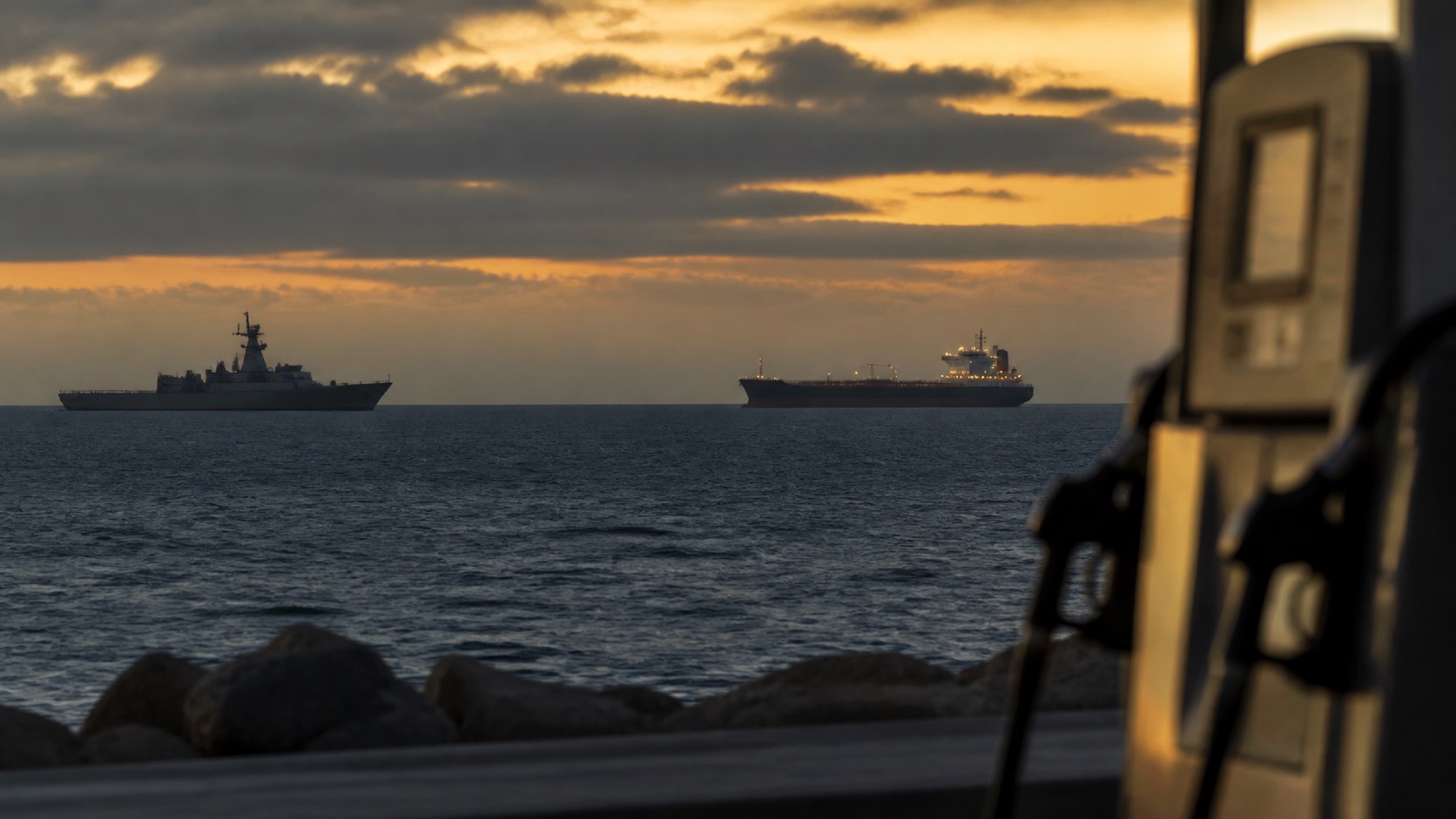
How the US–Iran war began
US and Israeli forces began major operations against Iran on February 28. The administration said the campaign was intended to eliminate imminent threats, prevent Iran from obtaining a nuclear weapon and degrade the security forces capable of attacking the United States and its partners.
The opening attacks struck leadership, military and nuclear-related sites. Iran answered with missiles and one-way attack drones aimed at American bases and regional partners. The conflict quickly extended beyond Iran's borders to Bahrain, Kuwait, Jordan, Iraq and the waters around the Persian Gulf.
The campaign followed American strikes on underground Iranian nuclear facilities in June 2025. Those earlier attacks damaged key sites, but US officials later acknowledged that enriched uranium remained in Iran. That unresolved stockpile became part of the argument for the 2026 operation.
Six months of fighting have demonstrated the difference between destroying facilities and achieving a political outcome. Military force can damage equipment, buildings and command networks. It cannot by itself establish how a future Iranian government handles nuclear material, accepts inspections or calculates the value of rebuilding.
That distinction is essential when judging claims of success. Iran's conventional military capacity has been substantially reduced according to US Central Command. The nuclear and diplomatic problem, however, has not been conclusively settled.
What the military campaign has achieved
US Central Command says American forces have carried out more than 13,000 strikes against targets including weapons factories, missile and drone sites, air defenses, naval vessels, storage facilities and command centers. Its public assessments describe Iran's air and naval capabilities as severely degraded.
Those figures come from one belligerent and should be read as an official US assessment, not an independently audited damage survey. Iran has incentives to conceal losses, while Washington has incentives to emphasize operational success. Satellite evidence and future Iranian activity will provide a clearer test.
The campaign has also consumed large quantities of interceptors and precision weapons. A low-cost drone can force a defender to use a much more expensive missile when a base, ship or populated area is at risk. Repeating that exchange over months stresses inventories even when the defender stops most incoming attacks.
This matters outside the Middle East. The United States relies on some of the same industrial capacity to replenish weapons for its own forces, support Ukraine, meet NATO plans and prepare for contingencies in the Indo-Pacific. Production lines can expand, but factories, skilled labor and specialist components do not appear instantly after Congress approves money.
Military success should therefore be measured against both the damage imposed and the capability consumed. A campaign that leaves Iran weaker can still reduce American flexibility elsewhere if replenishment lags.
The Strait of Hormuz changed the war's center of gravity
Iran's most economically powerful response was to disrupt commercial shipping through the Strait of Hormuz. The narrow waterway connects the Persian Gulf with the Gulf of Oman and carries a major share of internationally traded oil and liquefied natural gas.
A vessel does not need to be hit for trade to slow. Shipowners, crews, insurers and charterers respond to mines, missiles, seizures and uncertain military rules. Insurance premiums can rise sharply, schedules become unreliable and some operators avoid the route.
US forces have alternated between opening a passage through the strait and enforcing a blockade against traffic serving Iranian ports. A June memorandum of understanding briefly improved traffic, but accusations of violations and renewed operations prevented a stable normalization.
That produces two overlapping missions: restrict Iran's economy while keeping international commerce moving. They are not always easy to separate at sea. A ship's ownership, cargo, destination and financing can involve several countries, making enforcement legally and operationally complicated.
The shipping question now sits alongside the nuclear question. Even a deal covering enrichment would not feel complete to markets unless vessels can transit safely, insurers return and regional producers restore shut-in output.
What six months of war has cost Americans
The human cost begins with 18 US service members killed and more than 750 wounded. Those totals can change, and they do not capture long-term rehabilitation, mental health care or the effects on military families.
Iranian civilians have also suffered. One of the most serious early incidents was a strike on a girls' school that reportedly killed about 160 civilians, including approximately 120 children. Iran blamed the United States and Israel; neither accepted responsibility, and US Central Command said it was investigating. Without a completed public investigation, responsibility should not be stated as settled fact.
The direct US fiscal cost has been estimated at more than USD 37.5 billion. The Defense Department has sought tens of billions more, while the administration proposed a much larger overall defense budget for fiscal 2027. Not all of that broader request is attributable to Iran, but the war is a major new pressure.
War spending does not translate one-for-one into an immediate tax increase. Congress can borrow, redirect money or approve supplemental funding. The cost still becomes part of federal deficits, future interest payments and competition among national priorities.
Households feel the conflict more directly through fuel. The US Energy Information Administration recorded an all-grades national gasoline average of about USD 4.22 a gallon for the week of August 24. Regional averages were lower on the Gulf Coast and higher on the West Coast.
Crude oil is not the only element in a pump price. Refinery operations, seasonal fuel rules, distribution, taxes and local competition all matter. The conflict nevertheless contributed to the abrupt rise by disrupting Gulf production and trade.
Why gasoline could remain volatile
Oil markets price expectations, not just today's physical supply. A credible reopening of Hormuz can lower prices before every tanker returns. A new attack or collapsed negotiation can lift them before a barrel is actually lost.
The Energy Information Administration expects global production and trade to recover gradually if access improves. Its August outlook projected easing prices over time, but forecasts are conditional. Renewed disruption, sanctions or damage to energy infrastructure would change the path.
Drivers can reduce exposure at the margins by combining trips, maintaining tire pressure and comparing local prices. Those measures will not offset a geopolitical shock for households with long commutes or limited transport alternatives.
Businesses face a wider effect. Airlines, trucking companies, farms and manufacturers pay for fuel directly and may add surcharges or raise prices. Higher transport costs can therefore reach groceries and services even when a customer rarely buys gasoline.
Australia is exposed through global oil and refined-fuel markets as well. It is not a party to the war, but a prolonged disruption can raise local petrol and freight costs and complicate US strategic attention in the Indo-Pacific.
Has the original objective changed?
The administration continues to say Iran must not obtain a nuclear weapon. What has changed is the operational emphasis around that objective.
Early public messaging emphasized rapid destruction of military and nuclear threats. By midyear, reopening shipping lanes and enforcing economic pressure had become prominent. The United States is now using blockade policy, sanctions and intermittent military action alongside negotiations.
Mission change is not automatically mission failure. Governments adapt when an adversary responds in an unexpected way. The danger is allowing several objectives to accumulate without defining which outcome is sufficient to end major operations.
Does success require the removal of enriched uranium, a permanent inspection system, the end of Iranian attacks on regional bases, unrestricted passage through Hormuz, or a broader change in government behavior? Each demand may be defensible, but the combined package is harder to negotiate and enforce.
An exit strategy needs priorities and verification. Otherwise, each temporary arrangement can collapse over one unresolved issue while military operations continue by default.
Why the June agreement failed
US and Iranian negotiators signed a memorandum of understanding in June after months of mediation and technical talks. It was intended as a pathway toward a comprehensive nuclear agreement and a reduction in fighting.
The arrangement did not survive. Both sides accused the other of violations, and renewed escalation followed within weeks. A memorandum can pause immediate pressure without resolving disputes over sequencing: who stops first, which sanctions are lifted, where nuclear material goes and who verifies compliance.
Future talks will need clearer triggers and dispute procedures. If one incident automatically collapses the entire arrangement, actors opposed to compromise gain enormous power. If violations carry no consequence, the deal loses credibility.
Mediators also need access and time. Technical verification by nuclear inspectors cannot be replaced by political statements. Maritime commitments require communication among navies and commercial operators, not only negotiators in a conference room.
The failure of one agreement does not prove diplomacy is impossible. It shows that a durable settlement must connect nuclear limits, regional attacks, sanctions and shipping rules without making every element dependent on perfect trust.
The war's political pressure is growing
Recent polling shows broad US dissatisfaction with the conflict. Support is stronger among Republicans than Democrats or independents, but it has declined across the six-month period. The issue is arriving just before midterm elections.
Voters do not separate national security from household economics. A president can argue that a higher fuel price prevents a larger future threat, while a family can reasonably judge the policy through the bill it pays this week. Both perspectives shape democratic accountability.
Congress also faces questions about authorization, funding and oversight. Legislators must decide whether the campaign's evolving scope matches the authority granted or claimed at the start, and whether supplemental spending contains measurable objectives.
Oversight is more useful when it asks narrow questions: What capability remains? What stockpiles must be replenished? What investigations are outstanding? What conditions would reduce operations? Partisan declarations of victory or disaster answer none of them.
What to watch in the next phase
First, watch shipping rather than rhetoric. Sustained tanker traffic, falling insurance premiums and fewer naval incidents would indicate real stabilization in the strait.
Second, watch weapons production and force posture. Emergency contracts, air-defense deployments and carrier rotations reveal how long the Pentagon expects elevated risk to continue.
Third, look for an inspection mechanism. Any nuclear agreement is only as credible as access to sites, material accounting and consequences for obstruction.
Fourth, follow the weekly fuel data. National averages can fall while particular regions remain expensive, and a forecast is not the same as a retail price.
Finally, watch the definition of success. A clear, limited public objective makes compromise and oversight possible. An open-ended promise to eliminate every future Iranian threat can sustain conflict without a reachable endpoint.
Six months in, the United States has demonstrated overwhelming strike capacity but not yet a durable political settlement. The next measure of success will not be another target count. It will be whether Americans and the region can move from recurring military action to verifiable security, predictable shipping and an exit that survives the first serious disagreement.
Readers can follow further developments through Sarvalaya's world politics coverage.